
Start with the truck’s off-truck workload
List everything that should happen somewhere other than inside the vehicle. That may include bulk prep, cooking, cooling, ingredient storage, dry-goods storage, cleaning, packaging, staging, and loading. The more clearly you separate truck work from commissary work, the easier it becomes to evaluate a facility.
Confirm your critical equipment
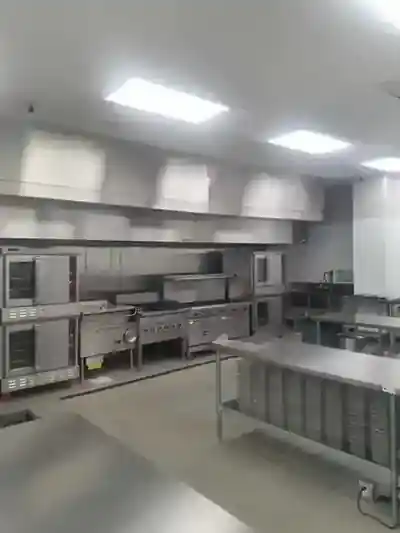
Make a short “production stops without this” list. Do not assume that a general equipment list means every item is always available at the exact time you need it. At Five Star, current facility information includes ovens, ranges, fryer, griddle, charbroiler, tilt skillet, mixers, food processor, prep tables, and other commercial equipment. Confirm any critical piece before planning a production schedule around it.
Separate cold, freezer, and dry storage
Estimate each storage category independently. A truck may have enough onboard refrigeration for service and still need significantly more commissary storage for ingredients, backup inventory, packaging, and prep. Include your normal operating volume and any seasonal spikes.
Five Star offers cold, freezer, and dry storage, with specific capacity and pricing discussed directly with the operator.
Ask about parking and vehicle fit
“Food-truck friendly” should lead to practical questions. How large is the truck or trailer? Does it need overnight parking? How frequently will it enter and leave the property? Is there room to stage safely? What are the current parking rules and availability?
Five Star offers fenced parking and supports food-truck operators. Exact vehicle and parking requirements should be confirmed before relying on a specific arrangement.
Match access to your service calendar
Events can start early and end late. Production may happen when a traditional retail business is closed. Ask whether approved users can access the facility when the operating schedule requires it.
Five Star offers 24/7 access for approved kitchen users. Public-facing business hours are separate.
Plan the entire service-day loop
A useful commissary workflow might look like this: arrive, retrieve stored ingredients, prep, cook or stage, load the truck, leave for service, return, unload, clean, store remaining items, and prepare for the next service window. Walk that loop mentally before choosing a facility. Friction that seems small once can become expensive when repeated several times every week.
Know what needs to be verified every time
- Current kitchen-space availability
- Exact equipment required for your menu
- Cold, freezer, and dry-storage capacity
- Truck or trailer size and parking needs
- Access schedule
- Production and cleanup requirements
- Current pricing and commercial terms
Think beyond the commissary
A food truck also needs customers and reliable event opportunities. Five Star is beginning to organize better ways for local food businesses and event planners to connect. The larger matching platform is a future phase, but food businesses can already raise their hand by sharing their business name, website, contact information, menu link, and service area.
Want Five Star to understand your operation?
Send the details that actually affect fit: your menu, production needs, storage requirements, truck or trailer information, service area, and preferred schedule.
Five Star-specific facility details reflect currently documented project information. Confirm current pricing, availability, equipment access, storage capacity, and operating requirements directly with Five Star.